



December 3, 2025
The Choreography of Flowers: Creative Floral Design Inspired by Movement
When Flowers Become Dancers
In the world of creative floral design, movement is becoming one of the most expressive tools a designer can use. Flowers are no longer arranged simply to sit beautifully; they are shaped to flow, arc, ripple, and gesture. Much like choreography, floral design uses line, rhythm, and intention to tell a story.
This evolving approach invites florists to think of each bloom as a performer. A rose can tilt toward another like a whispered conversation, a curve of stems can guide the eye, and layered tones create a sense of motion within stillness. Royal Flowers’ newest varieties lend themselves beautifully to this expressive style, offering texture and form that feel alive.

Color as the First Gesture
Before a floral design begins to move, it must speak — and color is often its very first expression. Through tone, contrast, and saturation, designers create a visual rhythm that guides the eye across the composition. Each rose variety carries its own emotional tempo, allowing color to set the foundation for motion.
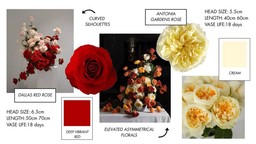
Dallas
Dallas roses bring a bold, commanding red that instantly creates a strong visual anchor. Their saturated petals add depth and intensity, making them ideal for designs that begin with confidence and intention.
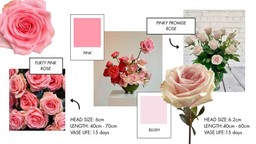
Flirty
A bright and spirited pink, the Flirty rose adds lift and lightness to any palette. Its youthful tone introduces a subtle upward motion, perfect for compositions meant to feel airy, fresh, and dynamic.
Mango Tango
Mango Tango roses offer a vibrant, energetic orange that naturally conveys movement. This lively variety brings warmth and spontaneity, adding a bold spark that enlivens creative floral design.
Pinky Promise
Soft, modern, and fluid, Pinky Promise roses serve as gentle transitions between stronger hues. Their smooth, flowing petals help create visual continuity, guiding the eye from one bloom to the next.
Antonia Gardens
With warm beige undertones and a refined petal structure, Antonia Gardens roses act as soft bridges within a palette. They introduce subtle movement by balancing bolder colors without interrupting the composition’s rhythm.
Movement Through Shape and Form
While color sets the rhythm of a design, structure defines its choreography. In creative floral design, the way stems are placed and shapes are built determines how an arrangement “moves” — whether it flows softly, expands boldly, or shifts gracefully from one focal point to the next. Contemporary florists use movement as a design language, shaping their compositions with intention and emotion.
Curved Silhouettes
Curved lines bring a sense of fluidity. Arcs, crescents, and gentle bends draw the viewer’s eye across the arrangement, creating a natural visual sweep. These forms mimic the gestures of dance, adding elegance and direction without overwhelming the design.
Layered Petal Movement
Petal textures create dimension that feels almost kinetic. When blooms with varying shapes are layered thoughtfully, the arrangement appears to ripple or unfold in stages. This technique adds richness and depth, giving the composition a sense of quiet motion.
Elevated Asymmetry
Intentional imbalance can be one of the most expressive tools in modern floral design. Asymmetry introduces tension, drama, and a feeling of natural movement, allowing the composition to breathe and expand. Rather than aiming for perfect symmetry, florists explore shapes that feel authentic and dynamic.
Movement in floral design goes beyond physical structure. It is emotional, guiding how the viewer experiences the arrangement — inviting them to follow its lines, feel its rhythm, and engage with its story.
Dance as Inspiration
Choreography and floral design share a surprising number of parallels. Both rely on rhythm, expression, and harmony between individual elements. Designers draw inspiration from dance by creating compositions that feel fluid and dynamic, not rigid.
A stem leaning forward becomes a gesture.
A sudden burst of color becomes an accent.
A gradient of tones becomes a dance phrase.
Royal Flowers’ newest varieties help designers explore these ideas, encouraging arrangements that feel alive with motion and intention.
A New Era of Creative Floral Design
The choreography of flowers reflects a shift toward design that values expression over symmetry and emotion over perfection. With the right colors, textures, and forms, florists create arrangements that feel like living compositions.
Royal Flowers’ new varieties offer endless opportunities for motion-inspired artistry. Through creative floral design, flowers become dancers, and arrangements become stories shaped by beauty, movement, and intention.